Choosing Serum: Look Beyond Origin and Grade to Suitability for Your Research
Oct 29,2026
In cell culture, serum is one of the most widely used supplements. For routine culture, serum is commonly selected based on factors such as the donor animal’s developmental stage, geographic source, product grade, and lot-to-lot consistency. However, in studies involving metabolic tracing, hormone regulation, or extracellular vesicles, certain serum components can become experimental variables rather than simply supporting cell growth. In addition to baseline quality, researchers should consider which components may affect the assay and whether targeted depletion is needed to reduce background interference.
This article reviews the processing principles, key characteristics, and typical applications of three commonly used types of functional fetal bovine serum (FBS), providing guidance for serum selection across different experimental systems.
1. Serum Composition: Nutrients and Potential Sources of Interference
Serum is commonly viewed as a source of nutrients for cells. It supplies growth factors, hormones, proteins, and other components that support cell growth and proliferation. From an experimental perspective, its major components can be broadly grouped into two categories:
Macromolecules: albumin, globulins, growth factors, adhesion proteins, and other components that support cell growth.
Small molecules: glucose, free amino acids, inorganic salts, hormones such as estradiol, cortisol, and thyroid hormones (T3/T4), as well as small-molecule metabolites.
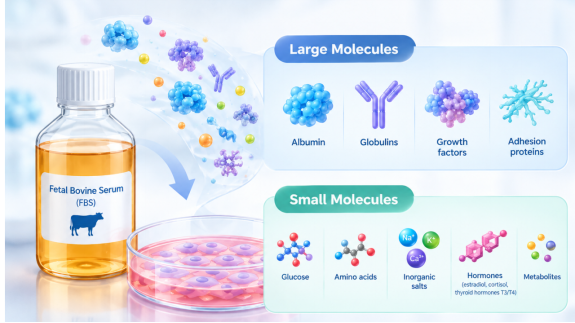
Figure 1. Major Serum Components and Their Categories
For most routine cell culture applications, a complete range of serum components provides broad nutritional support and promotes cell growth.
In certain experimental systems, however, these small molecules can introduce interference:
● When studying cellular glucose metabolism, glucose in serum can complicate the attribution of measured metabolites to the cells or the culture medium.
● When investigating hormone effects on cells, hormones already present in serum can elevate background signals.
● When isolating cell-secreted exosomes, serum-derived exosomes can be carried over into the sample.
In these cases, the full complement of serum components can become a source of experimental variability.
2. Functional Serum: Matching Serum to Experimental Needs
Functional serum is produced from standard FBS using specific processing methods to selectively remove certain components for particular experimental applications. The goal is not to make serum inherently higher quality, but to better match the serum to the experimental system. Its value depends on how well it fits the research objective, rather than on price or grade alone.
Three commonly used types of functional FBS address three frequent experimental needs.
Dialyzed FBS: For Metabolic Studies and Tracer Experiments
Key process: Dialysis. A dialysis membrane with a molecular weight cutoff (MWCO) of approximately 10 kDa is used to remove small molecules below this size while retaining larger components.
Components removed: glucose, free amino acids, inorganic salts, and small-molecule metabolites.
Components retained: macromolecular proteins such as albumin and globulins, along with most growth factors.
Typical applications:
● Metabolic research and metabolomics: glucose and amino acids in serum can contribute substantial background when intracellular metabolites are measured.
● Isotope tracing: unlabeled molecules of the same type in serum can dilute the signal when substrates labeled with ¹³C or ¹⁴C are traced.
● Cellular energy metabolism assays, such as Seahorse assays: controlled glucose background levels are important when measuring glycolysis and oxidative phosphorylation.
● Proteomics and peptidomics: reducing interference from serum-derived small molecules during mass spectrometry analysis.
● Drug screening: controlling interference from free small molecules in serum during drug-response evaluation.
Charcoal-Stripped FBS: For Hormone-Sensitive Experiments
Key process: Activated charcoal adsorption. Activated charcoal, often used with dextran, adsorbs small hydrophobic substances in serum, particularly steroid hormones.
Components removed: estradiol, testosterone, cortisol, progesterone, thyroid hormones T3 and T4, and some small growth factors.
Components retained: basic nutrients such as macromolecular proteins, amino acids, glucose, and inorganic salts.
Typical applications:
● Hormone receptor studies: research on estrogen receptor (ER)- and androgen receptor (AR)-related signaling pathways.
● Hormone-dependent cancer cell culture: breast cancer cells such as ER-positive MCF-7 and T47D cells, as well as prostate cancer cells.
● Endocrine and steroid research: receptor binding and regulation, tissue hormone secretion, and thyroid function.
● Stem cell and primary cell culture: minimizing the effects of variation in serum hormone levels on cell differentiation.
● Endocrine-disrupting chemical research: evaluating hormone-like effects of environmental compounds while reducing interference from hormones already present in serum.
Exosome-Depleted FBS: For Exosome and Other Extracellular Vesicle Studies
Key process: Methods such as membrane filtration and ultracentrifugation. Based on size differences, naturally occurring extracellular vesicles (30–150 nm) in serum are removed while small-molecule nutrients and bioactive proteins are retained.
Components removed: naturally occurring bovine exosomes and other extracellular vesicles in serum (removal rates of 98% or higher may be achieved by some high-quality products), along with vesicle-associated bioactive molecules such as bovine miRNAs.
Components retained: nutrients that support cell growth, as well as naturally occurring bioactive proteins and growth factors that promote proliferation.
Typical applications:
● Exosome isolation and characterization: nanoparticle tracking analysis (NTA) for particle size and Western blotting for markers such as CD63, CD9, and CD81.
● Extracellular vesicle omics: exosomal proteomics, transcriptomics, and miRNA sequencing, where residual bovine miRNAs may contaminate results.
● Intercellular communication studies: because vesicles mediate communication between cells, exogenous vesicles can complicate interpretation of biological effects.
● Studies of vesicles related to stem cells and cell therapy.
3. Frequently Asked Questions
Q1. Can the three types of functional serum be used interchangeably?
No. Each type targets a different source of interference. Dialyzed FBS removes small molecules, particularly glucose and amino acids. Charcoal-stripped FBS removes hormone-related small molecules while retaining glucose. Exosome-depleted FBS removes vesicles. Choosing the wrong type will not address the relevant source of interference.
Q2. Is functional serum necessary for routine cell culture?
Not necessarily. Standardized FBS is generally sufficient when the study does not involve metabolism, hormone signaling, or extracellular vesicles. Functional serum is a targeted option for specific experimental systems.
Q3. Is a higher removal rate always better?
Functional serum quality cannot be judged by a single metric. For exosome-depleted FBS, for example, both residual-vesicle validation data (such as NTA and CD63 measurements) and cell growth performance should be considered. Focusing only on the reported removal rate may not reflect performance in actual use.
The key to serum selection is not simply whether the quality is high, but whether the serum is suitable for the experiment. As research moves beyond routine cell culture into metabolism, hormone regulation, or extracellular vesicle studies, choosing a functional serum that addresses the specific need can help reduce unnecessary background interference and make the culture system more controllable.
Prev: Cell Culture Contamination: A Guide to Identification, Response & Prevention
Next: In Vitro Cell Models: Powerful Tools for Cardiovascular Disease Research